
(English/Espanol)
Spiritual Agroecology"/La Agroecología Espiritual
The core of our human being is pure being itself. Sometimes called love, spirit, the divine, awareness, or pure consciousness itself!!!!! It is the ultimate truth, the only truth!!!! Agroeocology, our urban gardens and farms, the family farm, our rural gardens and farms, our house plants et al, take us to this ethereal, spiritual core of our being, beingness itself. All joy, love, the divine, the ultimate truth, healing, transformation and human spiritual growth arise from our steeping ourselves in this luscious, eternal spiritual energy.
(Espanol) El núcleo de nuestro ser humano es el puro ser mismo. ¡A veces llamado amor, espíritu, lo divino, la conciencia o la conciencia pura en sí misma! Es la verdad última, la única verdad!!!! Delicioso y DIVINO!!!! La agroecología, nuestras huertas y granjas urbanas, la granja familiar, nuestras huertas y granjas rurales, nuestras plantas de interior y demás, nos llevan a este núcleo etéreo y espiritual de nuestro ser, el beingness mismo. Todo el gozo, el amor, lo divino, la verdad, la sanación, la transformación y el crecimiento espiritual humano surgen de sumergirnos en esta deliciosa y eterna energía espiritual, el espíritu mismo, el ser mismo, la alegría de ser, el núcleo etéreo divino del ser dentro de nosotros mismos!
Maria C. Whittaker

Maria C. Whittaker's New Initiative

"This is about waging love; we love ourselves, we love our children, we love the earth, we love all of life. So this is not a protest this is actually an act of waging love. The love we are talking about is the love of life not the love of death."
Charity Mahouna Hicks

Charity Hicks, a beloved Detroit community leader, commons advocate, food justice, food sovereignty and climate activist died July 8 from injuries sustained after being struck by a hit-and-run driver in New York City. She was a founder of the Detroit People's Water Board, and led opposition to the city shutting off water to low-income Detroit residents. Hicks was involved in many other local and national campaigns for the environment, water, social justice and food security and helped found the Great Lakes Commons network with many other organizations from around the lakes, including On The Commons.
Seeing the water as a commons, she said, empowers people. "The commons is not just how I survive and adapt, but how we are all surviving and adapting."
At the inaugural meeting for the Great Lake Commons, held at the University of Notre Dame, Hicks declared, “We are moving forward to build a deep awareness of water, our environment, culture and place. The participants in the gathering became the lived experience of a commons and I know that experience will begin to vibrate within the organizations, work, and hearts of those who attended. These ripples will spread out among the various communities and will gather together in a Great Lakes Commons. I felt the tension of difference, but also felt the beauty of our shared humanity. The gathering gave me renewed insight into what it takes to really be present, be authentic, and make connections. I trust the connections we made at the Great Lakes Water Gathering will grow deep roots, and be nourished by the nutrients of love, joy, respect, care, concern, gratitude, responsibility, and the waters of the Great Lakes.”
Hicks was often asked to open meetings, to set the tone and context. Inevitably she would begin by drawing in the strength and wisdom of the elders. She had a remarkable way of drawing the power in from the full group and empowering every person to speak from their hearts. Not only did she have an amazing spirit and energy that could fill any room with awe and hope, she also had a conviction, a sense of justice, that could strike at the heart of any matter. And she absolutely, and without so much as a pause, would insist on the best and highest solution that would benefit every single person. She truly exhibited shamanic capacities: her hand raised high, her eyes towards heaven and the greater good. I simply have never met another person that who more exuded a life-giving forcefield. She could invoke the spirit in all of us and in any room. ---Julie Ristau
 |
 An Organic dairy farmer and lifelong social-justice activist John Kinsman passed away January 20 2014 on his family farm near Lime Ridge, Wisconsin. He was 87. A founder and the longtime president of Family Farm Defenders, John touched the lives of thousands of people, worldwide, for decades as a grassroots proponent of organic sustainable agriculture and a globetrotting advocate of food sovereignty. John helped found Family Farm Defenders (FFD) in 1994 to promote sustainable agriculture, fair trade, workers rights, animal welfare, consumer safety, environmental stewardship and, above all, food sovereignty. Through FFD, John worked to relocalize food/farm economies and forge new economic relationships between consumers and farmers. He was also the secretary of the National Family Farm Coalition (NFFC) and served on the Midwest Organic Dairy Producers Alliance board of directors. John was also one of the leading voices in the U.S. challenging GMOs and an outspoken critic of corporate globalization. As one of the farmer leaders involved in Via Campesina, the largest umbrella organization for farmers, fishers, foresters, hunters, gatherers, and indigenous peoples in the world, John traveled extensively around the world to share the message of food sovereignty. “John was a good friend and trusted advisor and will be dearly missed,” said Cornucopia’s Mark Kastel. For those who wish to learn more about the inspirational life of John Kinsman, below are some links to recent profiles and interviews: 2012 Interview with John Kinsman conducted by Daniel Tucker at the Jane Addams Hull House Museum in Chicago: https://www.youtube.com/watch?v=j_0vviyVlPo 2012 Profile of John Kinsman by Marc Eisen for Progressive Magazine: http://www.progressive.org/family_farm_defender.html 2012 Booklet titled “John Kinsman: Activist Farmer” compiled by Daniel Tucker: https://danieltucker.files.wordpress.com/2012/01/kinsman-booklet-final-singlepage-web.pdf 2102 Interview with John Kinsman by In Motion Magazine: http://www.inmotionmagazine.com/ra11/j_kinsman_int11.html 2011 Interview with John Kinsman conducted by Bekah Wilce of PR Watch : http://www.prwatch.org/news/2011/10/11044/food-rights-network-interviews-food-farm-hero-john-kinsman |

Zen Master Thich Nhat Hanh is a global spiritual leader, poet, and peace activist, renowned for his powerful teachings and bestselling writings on mindfulness and peace. A gentle, humble monk, Dr. Martin Luther King, Jr. called him “an Apostle of peace and nonviolence” when nominating him for the Nobel Peace Prize. Exiled from his native Vietnam for almost four decades, Thich Nhat Hanh has been a pioneer bringing Buddhism and mindfulness to the West, and establishing an engaged Buddhist community for the 21st Century. Born in central Vietnam in 1926, Thich Nhat Hanh entered Tu Hieu Temple, in Hue city, as a novice monk at the age of sixteen. As a young bhikshu (monk) in the early 1950s he was actively engaged in the movement to renew Vietnamese Buddhism. He was one of the first bhikshus to study a secular subject at university in Saigon, and one of the first six monks to ride a bicycle.
When war came to Vietnam, monks and nuns were confronted with the question of whether to adhere to the contemplative life and stay meditating in the monasteries, or to help those around them suffering under the bombings and turmoil of war. Thich Nhat Hanh was one of those who chose to do both, and in doing so founded the Engaged Buddhism movement, coining the term in his book Vietnam: Lotus in a Sea of Fire. His life has since been dedicated to the work of inner transformation for the benefit of individuals and society.
In 1961, Thich Nhat Hanh traveled to the United States to teach Comparative Religion at Princeton University and the following year went on to teach and research Buddhism at Columbia University. In Vietnam in the early 1960s, Thich Nhat Hanh founded the School of Youth and Social Service, a grassroots relief organization of 10,000 volunteers based on the Buddhist principles of non-violence and compassionate action.
Meditation is not to escape from society, but to come back to ourselves and see what is going on. Once there is seeing, there must be acting. With mindfulness we know what to do and what not to do to help.
Thich Nhat Hanh
As a scholar, teacher, and engaged activist in the 1960s, Thich Nhat Hanh also founded the Van Hanh Buddhist University in Saigon, La Boi publishing House, and an influential peace activist magazine. In 1966 he established the Order of Interbeing, a new order based on the traditional Buddhist Bodhisattva precepts.
On May 1st, 1966 at Tu Hieu Temple, Thich Nhat Hanh received the ‘lamp transmission’ from Master Chan That.
Exile from Vietnam
A few months later he traveled once more to the U.S. and Europe to make the case for peace and to call for an end to hostilities in Vietnam. It was during this 1966 trip that he first met Dr. Martin Luther King, Jr., who nominated him for the Nobel Peace Prize in 1967. As a result of this mission both North and South Vietnam denied him the right to return to Vietnam, and he began a long exile of 39 years.


Kathryn Gilje
"Kat" Gilje is Executive Director of Ceres Trust. Ceres Trust, whose name
honors the ancient goddess of agriculture, provides grants that support
healthy and resilient farms, forests and communities; and the ecosystems
upon which we all depend. Ceres Trust focuses on grassroots leadership
and organizing, equity, and movement building toward systemic and
transformational change. Grant areas include: education for farmers in
organic, sustainable and resilient farming systems; efforts to promote food
crop biodiversity and public access to seeds; graduate student & farmer-led
research in organic agriculture; protection & proliferation of our vital
pollinators; protection of people, farms & ecosystems from pesticide poisoning
and from GMO contamination; protection of our forests from genetic engineering
and use as biofuels; research by independent scientists; and documentary
films & art (supported for public education purposes on key issues related to
the Ceres Trust mission, and as tools of cultural change).
An agronomist and community organizer trained by Voices for Racial Justice
in Minnesota, Kat previously was co–director of Pesticide Action Network
North America; co–founder/director of Centro Campesino; and senior
associate at the Institute for Agriculture and Trade Policy. She currently
serves on the steering committee of the Bay Area Justice Funders Network
and as chair of Genesis, a faith and values–based organizing group in
Oakland, California.
Primary Organizational Affiliation:
Ceres Trust
My Grantmaking Focus Is On:
Organizing and movement building for environmental health and justice; food and agricultural
systems; forest protection.
What Drew Me Into HEFN Leadership:
A warm welcome, committed and passionate people, opportunities to keep up with the science
and to dialogue on strategy – and fun! At HEFN, I've found people who are deeply committed to
ending the human and ecological harm wrought by toxic chemical reliance, and to changing
systems to protect health and equity. There is an understanding that people of color and women
are most affected by reliance on toxic chemicals, and support for grassroots organizing as part of
how to create change.
I See the HEFN Community Making a Difference:
HEFN members connect the dots across different issue areas related to health and equity – with each other and with other funders. HEFN is a hub of learning, resource sharing and strategy development.
When I'm Not at Work You Might Find Me:
In the streets at a protest/action, in the garden with my bees, or eating delicious food my partner whips up.


Humberto Rios Labrada, PhD
Humberto Ríos Labrada, a scientist and biodiversity researcher, worked with farmers to
increase crop diversity and develop low-input agricultural systems, encouraging Cuba’s
shift from agricultural chemical dependence toward sustainability.
Cuba’s history is inextricably linked with its fertile soil, abundant rainfall, and crop-friendly
climate. Indigenous peoples thrived on the natural food sources on the island before
Spanish colonists established some of the New World’s most infamous plantations in the
late 1700s. Cuban sugar fueled New World expansion. Spanish laborers and enslaved
African people were brought to Cuba to work the fields, with the island devoted mainly to
producing sugar that was sold primarily to the United States. Following Cuban independence,
agriculture remained the country’s key economic engine.
A fter Cuba’s socialist revolution, for more than 30 years, the Soviet Union served as Cuba’s
key trading partner. Cuba, with its long agrarian history, developed a modern agricultural
system with the help of chemical fertilizers and pesticides supplied by larger socialist
countries. Like many countries during the latter part of the 20th century, Cuba adopted a
chemical-intensive, highly-mechanized mono-culture that initially produced high yields and
reduced labor needs, allowing the country to be an important provider of sugar cane to its
trading partners. At one point, Cuba was the highest per-capita consumer of agrochemicals
in Latin America.
While the system served the country’s economic needs for several decades, the chemical
usage and single-crop dependence soon took its toll on much of Cuba’s farmland, which
makes up about 30% of Cuba’s total land area. More than half of the farmland was devoted
to sugar cultivation. On the remaining land, Cuban farmers had little choice about which
crops or varieties they could plant, using only a small selection of seeds developed to
produce high yields within a fertilizer and pesticide-intensive system. Thus, much of Cuba’s
environment was inundated with agrochemicals, threatening biodiversity and, over time,
reducing crop yields. With the fall of communism in Europe, Cuba lost its chief trading
partners along with its purchasing power and access to fertilizers and pesticides. As a
result, Cuba’s agricultural sector ground to a halt, and food shortages ensued.
To address this crisis, the government distributed large tracts of arable land to small farm
cooperatives. By necessity, farmers began cultivating semi-organic harvests, using little to
no pesticides or fertilizers. Farming cooperatives turned to crop rotation and beneficial insects
to encourage healthy yields. As a result, some of these smaller farms saw their soils begin
to regenerate.
During this time, Ríos, a folk musician and then a doctoral student in agricultural sciences at
the Higher Pedagogical Institute for Technical and Professional Education, stumbled upon
the cooperatives while doing research in the field. Traveling to farms that had not adopted
the sugar cane monoculture model, Ríos witnessed farmers using pre-industrial practices,
including crop rotation and experimentation with seed diversity. He watched as individual
farmers tested different seed varieties of particular crops, selecting seeds that would thrive
naturally in a particular environment. In each of these different locations, Ríos realized that
small farmers were contributing to a larger, nascent revitalization of the island’s agriculture.
Ríos saw that this method was based on sustainable, ecological practices led by farmers
themselves. He recognized these emerging transformations as opportunities and possible
solutions to Cuba’s agricultural and food crisis, and he committed to expanding sustainable
farming by forming partnerships with small farmers.
In the late 1990s, Ríos and his team of young scientists sought to catalyze this
farmer-led experimentation, creating teams of researchers and professors across the island
to establish agro-biodiversity learning centers with farmers to broaden sustainable
agriculture and seed biodiversity efforts. He viewed this work as having strong potential to
improve Cuba’s food security. Encouraging farmers to continue experimenting, Ríos helped
to organize farmers to promote and enhance crop diversity with one another, sharing their
knowledge and best practices, as well as their seeds. Ríos spearheaded “seed fairs” in
several farming communities across the island—gatherings where mutual learning and
sharing of seed and crop biodiversity could take place regularly.
While holding official teaching and research positions at the National Institute of Agricultural
Sciences for more than 10 years, Ríos continued his work with farmers, slowly gaining the
attention of the Cuban decision-makers and the international community. By 2007, Ríos
noticed a significant shift. His core belief—that agricultural scientists must work with and
learn from the farmers whose families have passed down traditional knowledge about crop
cultivation—began to take root. Fellow researchers and senior officials at the National
Institute of Agricultural Sciences began taking notice of the results of Ríos’ efforts. They
observed that farmers were now planting hundreds of varieties of crops without using
chemical pesticides. In communities that once harvested only a few crop varieties, farmers
were now cultivating many varieties of beans, rice, maize, and other crops. Not only did
food production increase through this approach, but the organic methods used also
contributed to the sustainability of the land. Today, more than 50,000 farmers participate in
seed biodiversity initiatives and carry out the farming practices promoted by Ríos and the
national network of universities and researchers supporting agro-biodiversity.
Rios has served as coordinator of the National Institute of Agricultural Sciences’s Program
for Local Agricultural Innovation, and he continues to focus his time on developing Cuba’s
sustainable agriculture sector. He has engaged in similar farmer-led biodiversity projects
throughout Mexico and Bolivia. He often uses his music as a means to engage communities
in biodiversity, performing songs that celebrate sustainable agriculture.
Spiritual Agroecology is also inspired by Siglo XXIII, International Institute for Cooperation Amongst Peoples, the work of El Salvadoran Peace Leader Marta Benavides who was nominated for a Nobel Prize, Hridaya Yoga Mexico and France under the leadership of Sahajananda, the communitys' leader and founder, the Menninger Clinic, and its globally recognized founder, Dr. Walt Menninger, the American Horticulture Therapy Association, and the Bowen Center for the Study of the Family.
Poems/Essays
Is the Food Movement A Spiritual Movement?

Is the food movement a spiritual movement, to reclaim our lives from the onslaught of a mechanized, impersonal, disjointed modern life which separates us from the deepest part of ourselves?
Is the food movement at root a spiritual movement, humanity unconsciously working to reclaim its consciousness amidst the onslaught of human unconsciousness?
Is the food movement a spiritual movement, as much about humanity reclaiming its divinity, its birthright to peace, wholeness and its own completeness as individual and collective beings, as about humanity feeding ourselves sustainably and justly grown, healthy, and nutritious food?
Is the food movement a spiritual movement, as much about creating "the Kingdom of God," "Nirvana," consciousness, here on Earth, rather than simply about growing healthy food in an environmentally sustainable and just way?
Is the food movement a spiritual movement, an effort to save ourselves by reconnecting with the deepest wisdom, consciousness, intelligence, knowledge, and peace that lies within us, that is our birthright, our essence, who we are at base, but from which we are becoming more and more disconnected?
Is the food movement a spiritual movement, actually orchestrated by consciousness itself, rather than a movement constructed by humanity, to restore order, peace and consciousness to the world?
Is the food movement a spiritual movement, orchestrated by consciousness itself, rather than by a humanity out of touch with its own true nature?
Who is in charge, humanity or consciousness?
What is consciousness?
How can we cultivate and harvest it?
What is our true nature?
What is really going on in the food movement?
What is it really?
Who are we really?
And what are we really doing?
Can we become conscious of the deepest reality, what is really going on with the food movement and all its connections and ramifications?
Is the food movement a spiritual movement, cultivating consciousness itself?
Copyright Notice
This work is distributed under the Creative Commons License.
In brief summary, you may make and distribute copies of the work herein so long as you give the original author credit, and if you alter, transform or build upon this work, you distribute this work only under a license identical to this one. The author of this work is Maria Whittaker and Spiritual Agroecology: Human Spiritual Growth through Agroecology and Beyond, a 502(c) (3) nonprofit founded by Maria C. Whittaker under the laws of Kansas, USA. The official name of this nonprofit is the Kansas Chapter of Family Farm Defenders. Family Farm Defenders is a national 501(c)(3) in the USA.
For the rest of the details of the license, see http://creativecommons.org./licenses/by-sa/2.0/legalcode.
Are our African American Urban Gardens and Farms a Spiritual Practice?

Kala Cuerington, Outreach and Engagement Coordinator for Urban Growers Collective in Chicago, https://urbangrowerscollective.org/, headed by the amazing Erica Allen, Laurell Sims, Candace Clark, Lauralyn Clawson, Darion Crawford, and Kala Cuerington.
"Kala has caught a passion for these farm flowers," says Erica Allen. "She creates beautiful bouquets for the farm stand in between welcoming and situating our wonderful volunteers on saturdays." Farm stand open Saturdays between 11-3pm!" Erika Allen@urbangrowerscollective

Lorrie Clevenger, Farmer/Co-owner at Rise & Root Farm!


Nyabweza Itaagi, South Chicago, IL, 21 August 2020 says, "I started a farm with my soul sis Mecca Bey, under the leadership and guidance of the incredible Erika Allen! Learning how to grow food is a dream come true. Connecting with the earth alongside other Black and Brown urban farmers has nourished my spirit (and my stomach) in more ways than I could have ever imagined."
Are our African American urban gardens and farms a spiritual practice?
As much about growing, healing and transforming we peoples ourselves spiritually, emotionally, and psychologically, as they are about we peoples growing and cultivating healthy, nutritious, fresh, human food, in harmony with nature?
Are our African American urban gardens and farms a spiritual practice?
As much about cultivating our own human consciousness and weeding out our own human unconsciousness, delusion and greed, as about we human beings cultivating healthy, nutritious, sustainably grown vegetables, fruits, whole grains and other plant foods?
Are our African American urban gardens and farms a spiritual practice?
As much about taking us to the eternal, formless, “God within," the peace, stillness, transcendence, knowing and wisdom itself, within us, as about us growing healthy, nourishing vegetables, fruits and whole grains in harmony with nature for the sustenance of our physical bodies?
Are we not ourselves nature?
Do not our urban gardens and farms bring this awareness of ourselves as nature to our own awareness?
Are our African American urban gardens and farms food and nourishment for our spirit, our soul, our “true selves,” the most profound parts of ourselves, as well as for our bodies?
Are our African American urban gardens and farms a spiritual practice?
Do our urban gardens and farms calm and still our minds, our thoughts, our feelings and emotions, as well as cultivate happiness, transcendence, awareness and consciousness in us, in even the most difficult circumstances?
Are our African American urban gardens and farms a spiritual practice?
Do our urban gardens and farms take us to the present, the eternal energy of being within us, to experience our true nature, spirit itself and in so doing, heal and grow us, we ourselves?
Are our African American urban gardens and farms a spiritual practice?
Are our African American urban gardens and farms “a meditation,” taking us deeper and deeper into our true selves to the knowledge of ourselves as spirit or pure awareness itself, transcending the suffering of this material world and these physical bodies, if only briefly, allowing us to refresh and gladden ourselves in the here and now, the present moment, continue on with life, and face and overcome its difficulties?
Are our African American urban gardens and farms a spiritual practice?
As much about growing ourselves, we human beings spiritually as about us growing healthy, nourishing human food in harmony with nature for ourselves, our family and community?
Are our African American urban gardens and farms a spiritual practice?
As much about growing and cultivating human awareness, pure consciousness itself as about we human beings cultivating human food for our physical bodies?
Are our African American urban gardens and farms a spiritual practice, as much about growing us as about us growing healthy food, sustainably grown?
Who are we?
Are we not more than these bodies?
Have not we, African descendants in the Americas and beyond, always had a strong spiritual practice, wisdom and transcendence that enabled us to thrive in even the most difficult circumstances in Africa and in the Americas, including the transatlantic slave trade, racism, and all forms of delusion, greed and hatred this humanity has to offer?
Have not our people overcome everything?
Did not our Mamas and Papas, Aunties and Uncles, Grandmas and Grandpas, Greats and cousins, and all extended family have a powerful spirituality, practices, and presence, including gardening and farming in traditional ways, that enabled them to not only survive but to thrive and transcend?
Is it possible that our African American urban and rural family vegetable and fruit gardens and farms in the past in the Southern part of these United States and beyond, enabled us not only to survive and thrive economically and to nourish and care for our own physical health, but to cultivate and grow our own human consciousness, wisdom, spirituality, our own selves in order to transcend the enormous difficulties we faced as a people and as individuals emerging from enslavement as well as all the ills and difficulties all humanity face?

Are our African American urban gardens and farms a spiritual practice?
That have enabled us to transcend life's most difficult challenges with the knowledge and experience of our own divinity, infinity, the God within, our true nature as spirit, awareness or pure consciousness itself?
Are we not God itself, spirit, infinite, pure consciousness, awareness, the creator, without beginning and end, and do not our urban gardens take us to this God within, our true selves, infinity, pure consciousness and awareness itself?
Who or what is growing whom?
Are we growing food or is growing food growing us?
Or both?
Are our African American urban gardens and farms a spiritual practice?
Is it possible that our people’s first urban gardens like My Aunt Bell and Uncle Lonnie Hawes' garden in Cleveland, and those in New York City, Chicago, Detroit, Los Angeles, Lincoln, Boston, Oklahoma CIty, Tallahassee and beyond, were not only about we newly freed people's nourishing our physical health and guarding our incomes by providing our families affordable fresh and healthy fruits and vegetables, but that they were also about nourishing our connection to our own souls, the God within, in order to thrive and overcome, not just survive? That part of “weeselves” that allowed us to continue on livin’ an’ growin’ an’ evolvin’ as a people materially and spiritually in the face of some of the worst human delusion, greed, and hatred known to humanity?
Are our African American urban gardens and farms as much about we people of direct African descent to these Americas nourishing, cultivating and growing our own spirituality, wisdom, connecting with the God within, knowledge, and transcendence itself, our own divinity and holiness itself, the key, foremost and critical ingredients in our thriving and success as a people as they are about us nurturing and caring for own physical health?
Are our African American urban gardens and farms a spiritual practice to grow our souls just as much as they are about us growing healthy food for our bodies in ways that will preserve our Mother Earth upon which we depend to live?
Are our African American urban gardens and farms a spiritual practice?
Copyright Notice
This work is distributed under the Creative Commons License.
In brief, you may make and distribute copies of the work herein so long as you give the original author credit, and if you alter, transform or build upon this work, you distribute this work only under a license identical to this one.
The author of this work is Maria C. Whittaker and Spiritual Agroecology: Human Spiritual Growth through Agroecology and Beyond, http://fssg.blogspot.com/, a 501(c) (3) nonprofit founded by Maria C. Whittaker under the laws of Ohio, USA.
The official name of this nonprofit is the Ohio Chapter of Family Farm Defenders. Family Farm Defenders is a national 501(c)(3) in the USA, founded by the amazing John Kinsman, a family farmer who led the work to raise awareness of the nature of the Family Farm as a critical and important way of life, and a healthy and sustainable way to produce human food. https://familyfarmers.org/
Family Farm Defenders is located in Madison, Wisconsin and advocates for the Family Farm, another spiritual way of life
For the rest of the details of the license, see http://creativecommons.org./licenses/by-sa/2.0/legalcode
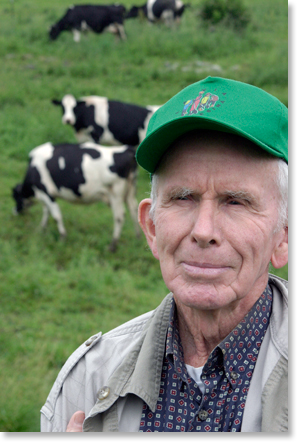
Is the family farm a spiritual way of life, as much about cultivating the human consciousness of the farm family and farm community, as it is about family farmers cultivating fresh, healthy, and sustainably grown human food?
Is Agreocology a Spiritual Way of Life?
(Under Construction)

Are all our Human Crises Human Spiritual Crises?
Are all our crises human spiritual crises?
As much or more about our own human suffering inside of us, the difficult pain within us, so excruciating, seemingly impossible to face, as they are about something outside of us?
Are all our human crises: “the environmental crises”, “the climate crises”, “the food and farm system crises”, ”our health crises ”, “our criminal justice system crises”, “our political crises,” “our economic crisis,” “the crisis of racism,” sexism, homophobia et al., or any other things or “systems” outside of ourselves that are easier to focus on than the pain within us, are all these crises actually human spiritual crises?
Are we not taking the intense and existential pain and suffering within ourselves, where it is so unbearable and excrutiating and projecting it out of ourselves onto “the other,” “another,” "the world" or something, anything, other than recognizing it as our own pain and suffering?
And our own suffering largely from childhood,
infancy, passed down from generation to generation unconsciously, unaware when we were so very vulnerable as infants and children? The lack of love and nurturance during our own childhood?
Are we not creating enemies and “the other” outside of ourselves when in reality, the unbearable suffering we feel is inside of us and the perpetrator is our own mind, thoughts, now projected outward?
Isn't it much easier to talk about "climate" and "environment" and "food" when in truth it is we human beings ourselves who are profoundly suffering inside in a way that we cannot resolve or heal because we cannot stand the pain of being with our own selves?
Are we humanity ourselves not the ones who are destroying our own beautiful and perfect Mother Earth, our home, our ecological niche, that has provided for all our needs in every way?
In truth, do we have an "environmental problem," or do we have "a human problem?"
What can we say about ourselves, a species who would destroy its own environment upon which it depends to live?
Does any other species do that: destroy the environment, its own ecological niche, upon which it depends to live?
What human beings can talk about their most profound internal suffering, largely from infancy and childhood, abandonment, abuse, lack of love and understanding in all its forms?
Much of it at the hands of our very own parents who are supposed to love and take care of is when we are infants and little children?
Our parents are supposed to love and care for us, but, out of their own suffering, largely passed on to them by their own parents, did they not pass their suffering onto us, their children, as well?
If we are not healed, can we heal our planet?
If we are not healed can we heal our environment?
If we are not healed can we heal our climate?
If we are not healed can we heal our food system?
If we are not healed can we heal our communities?
If we are not healed, can we save our planet, ourselves, our human communities?
Is it possible that the crises we humanity most and foremost need to address is our own human spiritual crises? Our own human healing? Our own human suffering?
Is it possible that the crises humanity most and foremost needs to address is our own human suffering, largely from childhood, at the hands of our own parents when we vulnerable infants, toddlers, and children?
Is it possible that the crises humanity most and foremost needs to address is our own human spiritual growth?
Is it possible that the crises humanity most and foremost needs to address is our own human need for healing, transformation and for our own human spiritual growth?
Is it possible that this crisis, the profound spiritual crisis of unhealed human suffering, an unhealed humanity, largely passed down to we human beings by our very own parents or caregivers when we were little, helpless, dependent and vulnerable infants, babies and children, is the root cause of all our human crises?
Racism, sexism, violence and crime, police murders and violence, prison guard violence and abuse, greed, all human delusions and hatred, our environmental crises of climate, pollution, and land degradation, our health crises: is it possible in any way that all these human crises are largely caused by our own profound human suffering which originated when we were helpless infants and children?
Is it possible that our wrong and over consumption, our food and farm crises, our economic crises, our environemental crises, all our human crises at their root, the most profound level, is it possible that all these crises are at the most profound level human spiritual crises?
Is it not true that the vast majority of we human beings suffer profoundly from our childhoods, unspeakable wounds about which we cannot even talk or acknowledge, much less heal, passed onto us by our very own parents, family, neighbors, teachers and other memebers of our community, who were themselves as well suffering profoundly?
Is it not true that we human beings are full of delusion, believing in things that are simply not true, like "race" and "male superiority," to name two?
Is it not true that we human beings overconsume and wrongly unconsciously consume to avoid our own internal suffering and that that over and wrong consumption is destroying our beautiful perfect home, ecological niche, planet Earth, upon which we depend to live?
Is it not true that we human beings are full of greed, uncontrollable greed, that is the root cause of our over and wrong consumption which is destroying our climate upon which we depend to live?
Does any other species do this: destroy the very ecological niche, climate, planet upon which they depend to live?
Have we human beings not also destroyed many other peoples and species on this marvelous blue green planet out of our own enormous uncontrollable consumption born out of our own excruciating suffering which we have not been able to acknowledge much less heal?
Are not the seeds of our own destruction sewn deep within our own selves, our own human psyches, our own human consciousness?
Are we not our own worst enemies?
Are we not destroying ourselves?
Are we not doing this to our own own selves?
Are we not doing this to ourselves?
Do we have environmental problems, or do we have human problems?
Are we not the ones who are destroying our very own environment, our very own climate upon which we depend to live?
Do we have health problems or do we have human problems, for are we not the ones who are destroying our own human health and well being through wrong and over consumption?
What can one say about a species who would make itself ill and kill itself through wrong and over consumption?
What can one say about a species who would destroy its own environement, its own climate, upon which it depends to live through over and wrong consumption?
Is it not true that it is we human beings ourselves, our own hearts, minds, consciousness and our own profound suffering that are the very cause of our own destruction, demise?
Is it not true that it is we human beings ourselves, our hearts, minds, consciousness and suffering which are the source of all our over and wrong consumption which is the root cause of our environmental crises: all pollution, land degradation, the climate crises, global warming and all?
Is it not true that it is we human beings ourselves, our hearts and minds, which are the source of all our over and wrong consumption? Which are the root cause of our human health crises? Are we not eating too much and too much of the wrong things in order to feel better and appease our anxieties, fears and all our uncomfortable feelings, suffering and thoughts?
Is it not our own suffering, thoughts, and uncomfortable and sometimes unbearable and unspeakable discomfort and feelings that drive our largely unconscious high levels of consumption and wrong consumption?
Are we not simply seeking somehow to just feel good or run away from the pain and suffering that is inside of us with all this consumption?
Are not we doing this all unconsciously, simply unaware, but so extremely that we are destroying our own health and our own ecological niche upon which we depend to live?
What would cause we human beings to behave so uncontrollably, so unconsciously that we are actually facing the destruction of our own health and lives and the health and lives of our children and communities across our home, our planet Earth?
What would cause we human beings to behave so uncontrollably, so unconsciously that we are actually destroying our own environment, our own ecological niche upon which we depend to live?
Are we not the very source of our own destruction?
Are we not ourelves the most profound cause of all our human crises?
Is it thus not our very own human healing and spiritual growth which is the root cause solution to all our human crises?
Is it not thus our very own human healing and human spiritual growth which is the most important thing any and all of us can do to preserve the environment and ecological niche upn which we depend to live?
Is is not thus our own human healing and spiritual growth which is the root cause cure and ultimate solution to all our human crises including our food, health, environmental and climate crises?
Is it not thus our own human healing and spiritual growth which is the solution to all our human crises which are all in fact human spiritual crises at root?
Is it not our own human healing and spiritual growth which is the solution to all our human crises?
Is it not ourselves we need to heal and grow spiritually in order to save our world?
Is it not ourselves we need to heal and grow spiritually in order save our environement?
Is it not ourselves we need to heal and grow spiritually in order to save our climate?
Is it not ourselves we need to heal and grow spiritually in order to save our health?
Is it not ourselves we need to heal and grow spiritually in order to save our food system?
Is it not ourselves we need to heal and grow spiritually in order to save ourselves?
Is it not ourselves we need to heal and grow spiritually in order to save oursevles, our peoples', our children, our communities, our nations, our very species?
For is not we ourselves who are destroying we our very selves, our communites, our society, our own species out of our very own profound, poorly and misundertood internal suffering about which we remain largely unaware, much less able to face and heal?
Is it not we ourslves who are doing it to ourselves, destroying ourselves ?
Is it not we ourslves who are the profound root cause of our own destruction?
And yet, once we are truly able to acknowledge that we are doing this to ourselves, will we not be free, healed and whole forever and truly finally able to save ourselves and our world from destruction by our own hearts, minds. hands and human consciousness?
When we and I are truly aware that is we human beings ourselves, and me my myself who are destroying ourselves and me myself, then will not we and I be truly wholely on the path to our own whole and complete healing and thus able to save ourselves, our children and our world?
(Under construction)
Introduction

Love in Action: The Leadership We Need
"I open my heart and send forth my energy of love and understanding to everyone who has made me suffer, to those who have destroyed much of my life and the lives of those I love. I know now that these people have themselves undergone a lot of suffering and that their hearts are overloaded with pain, anger and hatred. I know that anyone who suffers that much will make those around them suffer. I know they may have been unlucky, never having the chance to be cared for and loved. Life and society have dealt them so many hardships. They have been wronged and abused. They have not been guided in the path of mindful living. They have accumulated wrong perceptions about life, about me, and about us. They have wronged us and the people we love. I pray to my ancestors in my blood and spiritual families to channel to those persons who have made us suffer the energy of love and protection, so that their hearts will be able to receive the nectar of love and blossom like a flower. I pray that they can be transformed to experience the joy of living, so that they will not continue to make themselves and others suffer. I see their suffering and do not want to hold any feelings of hatred or anger in myself toward them. I do not want them to suffer. I channel my energy of love and understanding to them and ask all my ancestors to help them." Zen Master Thich Nhat Hanh http://plumvillage.org/

Zen Master Thich Nhat Hahn
"Although attempting to bring about world peace through the internal transformation of individuals is difficult, it is the only way. Wherever I go, I express this, and I am encouraged that people from many different walks of life receive it well. Peace must first be developed within an individual. And I believe that love, compassion, and altruism are the fundamental basis for peace. Once these qualities are developed within an individual, he or she is then able to create an atmosphere of peace and harmony. This atmosphere can be expanded and extended from the individual to his family, from the family to the community and eventually to the whole world.” H. H. The Dalia Lama, Forward, “Peace is Every Step,” by Zen Master Thich Nhat Hahn
“Our ecology should be a deep ecology—not only deep, but universal. There is pollution in our consciousness. Television, films, and newspapers are forms of pollution for us and our children. They sow seeds of violence and anxiety in us and pollute our consciousness, just as we destroy our environment by farming with chemicals, clear-cutting the trees, and polluting the water. We need to protect the ecology of the Earth and the ecology of the mind, or this kind of violence and recklessness will spill over into even more areas of life. [166] Our Earth, our green beautiful Earth is in danger, and all of us know it. Yet we act as if our daily lives have nothing to do with the situation of the world. If the Earth were your body, you would be able to feel many areas where she is suffering. Many people are aware of the world's suffering, and their hearts are filled with compassion. They know what needs to be done, and they engage in political, social, and environmental work to try to change things. But after a period of intense involvement, they become discouraged, because they lack the strength needed to sustain a life of action. Real strength is not in power, money, or weapons, but in deep, inner peace. If we change our daily lives—the way we think, speak, and act—we change the world. The best way to take care of the environment is to take care of the environmentalist.”
The Sun, My Heart, Thich Nhat Hahn
http://www2.hawaii.edu/~freeman/courses/phil394/The%20Sun%20My%20Heart.pdf
Aware of the suffering caused by unmindful consumption, I am committed to cultivating good health, both physical and mental, for myself, my family and my society by practicing mindful eating, drinking and consuming… I am determined not to try to cover up loneliness, anxiety or other suffering by losing myself in consumption. I will make every effort to consume in a way that preserves peace, joy, and well-being in my body and mind, and in the collective body and mind of my family, my society and our Earth.
The Fifth Mindfulness Training, Nourishment and Healing, (in part), Zen Master Thich Nhat Hahn, Plum Village, France
“If my hypothesis about societal anxiety is reasonably accurate, the crises of society will recur and recur, with increasing intensity for decades to come. Man created the environmental crisis by being the kind of creature he is. The environment is part of man, change will require a change in the basic nature of man, and man’s track record for that kind of thing has not been good. …I believe man is moving into crises of unparalleled proportions, that the crises will be different than those he has faced before, that they will come with increasing frequency for several decades… The type of man who survives that will be one who can live in better harmony with nature.” Murray Bowen, MD https://thebowencenter.org/theory/murray-bowen/
“To proceed very far through the desert, you must be willing to meet existential suffering and work it through. In order to do this, the attitude toward pain has to change. This happens when we accept the fact that everything that happens to us has been designed for our spiritual growth.”
― Scott Peck, The Road Less Traveled: A New Psychology of Love, Traditional Values and Spiritual Growth
“No mud, no lotus.” Zen Master Thich Nhat Hahn
“When another person makes you suffer, it is because he suffers deeply within himself, and his suffering is spilling over. He does not need punishment; he needs help. That's the message he is sending.”
― Thich Nhat Hanh
"Political and social change is not enough......it will be easier when we have that transformation of ourselves at the base."
Zen Master Thich Nhat Hahn
Humanity's Spiritual Crisis: Transforming Ourselves to Heal the World

by Paul Brunton, Larson Publications (2017), ISBN 9781936012374. (Print edition is titled The Spiritual Crisis of Man)
“As the twenty-first century unfolds, our world faces dire political, ethical, ecological, and spiritual challenges on a global scale. How are we to understand the crises that are affecting us all?
Paul Brunton’s Humanity's Spiritual Crisis spells out how the nature of today's widespread, confusing, and many-layered crisis is essentially a spiritual one—and one that we ignore to our peril—we must undertake a major step forward in our evolution as a species. He provides a deeply informed framework of spiritual understanding and practices that help us find the most effective and creative ways to address these momentous situations in our daily lives.
Brunton was well aware of the potential for disaster in the contemporary world. He had witnessed the two world wars and recognized the increasing danger of a nuclear holocaust. First appearing in 1952, Humanity's Spiritual Crisis, offers the only sure way to heal our society, and our planet—by awakening enough individuals to transform themselves and their world.
He writes, “I had been allowed a peep behind the curtain of world events, behind the present pattern of the human scene on this planet, and there was a real necessity for knowledge of it, if all of us were not to go down into the gravest catastrophe. The population explosion, the poisoned environment, and the poisoned mental and emotional climate—the crisis I alluded to in Humanity's Spiritual Crisis (orig. title: The Spiritual Crisis of Man), written more than [half] a century ago, has not only worsened but spread everywhere.”
Humanity's Spiritual Crisis makes it clear that we cannot build a new and better world until we have looked within, found the soul's light to guide us, and made unavoidable inner changes. We may consciously co-operate with the inner purpose of this crisis and intelligently participate in it to our own benefit. If, however, we blindly resist or lazily delay, we will suffer the consequences.”
The mission of “Spiritual Agroecology” is to raise human awareness of the possibility that traditional forms of agriculture, agroecology, the family farm, and our urban, suburban and rural gardens may be, at the most profound level, human spiritual practices in themselves, which are cultivating our own human consciousness or awareness. The mission of Spiritual Agroecology is to raise human awareness of the possibility that it may be awareness and consciousness itself which is cultivating and growing we human beings ourselves and raising our individual and collective human consciousness "through" "the food movement."
Is it possible that "the food movement" might just be "a human movement," just as much about growing and cultivating we human beings as it is about we human beings, individuals, families, and communities growing and cultivating healthy, affordable food for all “agroecologically”? The mission of Spiritual Agroecology is to raise human awareness, consciousness of the possibility that "the food movement" is just as much a "human spiritual movement," about relaxing and calming we human beings, our minds, our thoughts and cultivating higher levels of human consciousness and awareness, as it is a "food" movement, about cultivating sufficient quantities of affordable, accessible, healthy, nutritious, sustainably and agroecologicaly grown, human food.
Agroecology, sustainable agriculture, the family farm, and our urban, suburban and rural gardens take us deeply into the present, "the now," "the present moment," the deepest, most profound place with us ourselves, our spiritual home within ourselves, the ultimate, the divine peace and transcendence within ourselves, the seat of pure consciousness, awareness, spirit itself within ourselves. This stops the constant thinking, our emotions and feelings, and takes us to the "true home" within ourselves, the most deep, profound and still part of ourselves. Agroecology and sustainable ways of growing food take us to what Zen Master Thich Nhat Hahn calls "the transcendent dimension, " "the ultimate reality.”
"We" say Thich Nhat Hahn are more than our minds, i.e. our thoughts, more than our feelings and emotions, more than our bodies, and more than this "physical" experience, and what we sense through our 5 senses. What we are allows us to experience what Thich Nhat Hahn calls "the ultimate truth," "the ultimate reality," a way of knowing, and wisdom and knowledge itself, beyond thought, our minds, and our five senses of taste, touch, smell, hearing and sight.
We human beings have created and involved ourselves deeply in a panoply of "movements:" "environmental," climate, food, health, farm, food sovereignty, sustainable agriculture, sustainability, ecological, agroecological, ---to change our food, health, farm, and agriculture systems, as well as our own behavior which is destroying our climate, environment, and health. We have also focused on working to consume less and more wisely, but as yet we have not been successful in reducing our levels and types of consumption in a way that can stop or significantly slow down the variety of crises we are facing to our continued existence as a species.
A large contributor to this situation is that we human beings are largely "unaware," "unconscious," as all spiritual leaders and human psychologists point out. From Jesus Christ to the Buddha to the Hindus and western psychologists alike, "spiritual teachers" teach that humanity is not fully aware or conscious. Humanity is not awake. Humanity is asleep.
These traditions and professions also point out that no one is at fault, to blame, but that this is just the human condition that humanity must overcome and is overcoming through the generations through a process of evolving to higher and higher levels of human consciousness. Awakening. Yet, humanity remains largely unaware of these profound truths in which we are all steeped, living as if blindfolded and with ear muffs, completely unaware of our human unconsciousness and blaming all else, even our own environment, which is perfect and divine in every way, for our own human behavior which is destroying the very ecological niche upon which we depend to live. Humanity is unable to focus on its own internal suffering and transform, grow and heal ourselves. We are unable to evolve our own human consciousness.
"Spiritual Agroecology" ultimately seeks to raise human consciousness to become more aware essentially of all these dynamics so that we can actually begin to focus on profoundly understanding ourselves, our own suffering, the suffering of our families, children, parents, grandparents and ancestors that may have unconsciously been passed down to us, and that we may have passed down unconsciously as well to our own children as well as to other members of our society. In this way, by making conscious the unconscious, we can consciously take steps and actions to heal transform, and grow we ourselves and our communities and societies spiritually and psychologically, as well as our own children and families and stop the unconscious cycle of suffering which spiritual leaders and human psychologists suggest is actually the root cause of our destruction of our own environment upon which we depend to live.
Both spiritual leaders like Thich Nht Hahn and human psychologists like Dr. Murray Bowen, the founder of Bowen Family Systems Theory which explains how humans unconsciously pass their suffering from generation to generation and to others in society, clearly identify this human suffering as the root cause of all our human crises. Today, as well, “Western new age spiritual leaders” like Iyanla Vanzant, Eckharte Tolle and Byron Katie, to name only a few, also identify the suffering passed down from generation to generation in the family as the building block of all suffering in human society.
This work seeks to make humanity aware that agroecology, the family farm, our urban, suburban and rural gardens, our community gardens, and our indoor plants as well, are all actually cultivating us, we human beings ourselves, our own human consciousness, as well as relaxing us, calming us down, bringing us home to the present and to ourselves, where peace, joy and happiness is possible. Interestingly, "Horticulture Therapy," a field in western human psychology, has recognized how beneficial plants, gardening, horticulture, and hands on farming is to the well being of we human beings and is also used to even cure illnesses such as depression and anxiety and other human suffering. https://www.ahta.org/; https://www.ahta.org/what-is-horticultural-therapy
This work seeks to awaken humanity to the human healing, transformation and much needed spiritual growth work of agroecology, the family farm, our gardens and beyond, in order that we might consciously cultivate our own human consciousness in this way and consciously continue the process of growing ourselves and transforming our own human consciousness and behavior in order to save ourselves and our society from predicted destruction. Spiritual Agroecology points toward the higher power at work through agroecology and beyond, that is actually transforming we human beings ourselves.
Spiritual Agroecology seeks to contribute to the much needed collective human awakening and to dissolve our own collective and individual human unconsciousness in order to build an agroecological, sustainable and just food system. This work is based thus, to reiterate, on the recognition that it is we ourselves, our own human unconsciousness, which is the major obstacle to our creation of agroecological food systems which are truly democratic, healthy, just, fair and sustainable where the people have supreme control over their food and agriculture, food sovereignty.
Spiritual Agroecology seeks to add to the collective work being done to spark this collective awakening through its writings, radio show, workshops and conference presentations. Spiritual Agroecology also seeks to add to the collective human work being done by sharing the personal healing journey of its founder, Maria C. Whittaker, in which horticulture, agroecology and nature itself played the key role.
I. Mindfulness 4 Our Movements? "Healing, Transformation and Spiritual Growth 4 the Activist?
Besides raising awareness, “Spiritual Agroecology” seeks to offer, create, and fund opportunities for interested global to local food policy makers, food corporation executives, food movement leaders and activists, educators, students, growers, farmers, and consumers to practice mindfulness with global spiritual leader Thich Nhat Hahn's mindfulness practice communities and at his mindfulness practice centers in the US, France, Thailand and beyond for their own healing, transformation, and spiritual growth. Almost all of these mindfulness practice centers now also have organic farm internships as well which allow retreatants to work on the organic farm as an official mindfulness practice while also practicing “formal mindfulness” long term at these Mindfulness Practice Centers.
These farms at Thich Nhat Hahn Mindfulness Practice Centers were started by our good colleague, former Kansas City Center for Urban Agriculture co-founder Daniel Dermitzel, who now works and lives in Berlin, Germany and founded and runs The Urban Mindfullness Lab there!!!! https://www.facebook.com/Urban-Mindfulness-Lab-930645823737037
This project also lifts-up and promotes the incorporation of the vision and strategies of peacemaker Thich Nhat Hahn and his mindfullness practice communities in local to global food policy and policymaking. This work envisions the Food Movement through Thich Nhat Hahn, global peace leader in the Zen Buddhist Tradition, peace in oneself, peace in the world vision and by incorporating Gandhi's nonviolent principles for social change and the work of the Dhali Lama and many of humanity's spiritual teachers.
II. Peace: Love in Action
The need for peace cries out. Social peace is the sixth principle of food sovereignty. ( “Social Peace. Everyone has the right to be free from violence. Food must not be used as a weapon. Increasing levels of poverty and marginalization in the countryside, along with the growing oppression of ethnic minorities and indigenous populations, aggravate situations of injustice and hopelessness. The ongoing displacement, forced urbanization, repression and increasing incidence of racism of smallholder farmers cannot be tolerated.”)
III. My Personal Story of Healing the Family Suffering that was Passed Down From Four Generations in My Family to Me: From My Great Great Aunt and Step Great Aunt to My Grandmother to my Mother to Me.

My great great grandparents around the late 1800's, the J.J. Hawes family, 14 children and two parents in small town, rural Lincolnton, GA.
I have also recently started including sharings from my own healing, transformation and spiritual growth journey. This journey began with my coming to a profound understanding of the suffering that my mother shared with me that was passed down through four generations including me in our family beginning with the death of my great grandmother, Naomi Hawes as a young mother.
Her early unexpected death left her daughter, my grandmother, motherless. When her father remarried, unfortunately her stepmother severely mistreated her causing her to run away from home at about 12, according to the family. She lived with various great aunts and other relatives.
Not surprisingly she got pregnant at 16 by a man who then abandoned her. That infant was my mother, ne Frieda Maudette Gartrell. A great aunt then actually kidnapped my grandmother's two day old infant from her. She then went up north to Columbus, Ohio with the infant, my mothr, and her domestic partner who I later knew only as Grandpa.
My grandmother and her great aunt (my great great aunt), then fought for years over my mother, but tragically my grandmother was never able to recover her child. My mother herself although academically gifted was as one might easily imagine traumatized by all this. As well, her great Aunt who kidnapped her was a violent “mother,” my mother shared with me.
My mother was apparently academically gifted, however, and eventually able to go on and self actualize despite her traumatic childhood, getting her PhD in Spanish from the Ohio State University at the age of 77 with the highest grade on her Spanish PhD Oral Exam in the history of the Spanish Department. She did pass all this suffering on to me, completely unconsciously of course, as well, however as her gifts including her gifts for academics and intelligence.
I was the first one in this tragic family history to become aware of all the suffering being passed on and to be able to make conscious efforts to heal, transform and grow myself, an ongoing work in progress. However, my suffering and the suffering of my family have borne in me unexpected fruits as well, i.e., a profound understanding that suffering is passed from generation to generation in the family and how to heal it. As well another blessing is the knowledge and awareness of and the gifts that were also passed down by this same family that is making it possible for me to heal myself. These gifts included academic intelligence and skill, the ability to suffer on my own behalf, for my own good, typically known as discipline, ie, the ability to do hard things today for something good one wants tomorrow. Other positive gifts include humility, the lack of greed, and the desire and knowledge to heal, transform and grow myself as well. I am the one in my family who has been able to consciously become aware of both this story of suffering and healing, and heal myself, a work in progress.
Now my suffering is becoming my enlightenment, my wisdom, my strengths, my profound understanding, and something that grew me and made me stronger, more compassionate, understanding, wise and caring. Now my suffering has transported me to the most profound and ultimate TRUTH, the spiritual, which makes all healing, transformation a nd spiritual growth possible. Its a practice. It takes work, discipline and it is the way, the profound path of life that I am privileged to be able to share.
IV. "Visions of Food Sovereignty & "Spiritual Agroecology" from Cuba" and the Cuba-USA Agroecology Solidarity Group
https://www.facebook.com/groups/CubanSustainableAgriculture/
This work includes a project I founded in 2008 with the support of many American and Cuban colleagues and friends, such as from Cuba: Dra. Nilda Perez, Dr. Humberto Rios, Otto Manuel, a researcher at Cuba's INIFAT, INIFAT, Cuba's urban agriculture institute, Cuban Agroecologist and Ph D Candidate Emilio Andres, and from the USA, the amazing Cuban literacy fillmaker and beyond, activist Catherine Murphy, Food First, the super amazing New World Agroecology Group at the University of Michigan, including Drs. Ivette and John Perfecto, leading Latin American Agroecologitsts Dr. Peter Rosset and Dr. Miguel Attieri, John Peck, the ED of Family Farm Defenders and Family Farm Defenders, which has supported all her food movement work since about 2006 and the amazing and super divine and capable Alicia Froman, ED of Plaza Cuba with whom Maria was first able to travel legally to Cuba to research Cuba's world renowned food sovereignty and agroecology movement.
Maria Whittaker

In 2014, she found Zen Master Thich Nhat Hahn's work on line and began practicing on her own in Kansas City. Today, She has done 2 3 month retreats and 6 shorter retreats (about 4 to 5 weeks) in the Thich Nhat Hahn tradition since 2014. She has also done 3 six week retreats at Hridaya Yoga Retreat Center in Manzunte, Mexico and rural France.
Emilio Andres, Cuban Liaison, Researcher, ACTAF, Cuban Sustainable Agriculture Organization.
Maria Whittaker foodsovereignty@yahoo.com Please put "Urgent" in the headline for more prompt attention.
Websites
Cuba-USA Agroecology Solidarity Group
https://www.facebook.com/groups/CubanSustainableAgriculture/
Spiritual Agroecology: Human Spiritual Growth through Agroecology and Beyond has 501(c)(3) status through its chapter affiliation with Family Farm Defenders, The Ohio Chapter of Family Farm Defenders. Family Farm Defenders is a 501(c)3 nonprofit corporation based in Madison, WI. FFD advocates for family farmers and food sovereignty and was founded by family dairy farmer John Kinsman, a leader in the local to global food sovereignty movements! http://familyfarmers.org/
Advisors
Catherine Murphy, Filmmaker, Maestria
In 1991 a year before the peace accords were signed, Benavides returned home and founded the International Institute for Cooperation Amongst Peoples, which promotes the values and practices of a culture of peace. She established community training centers and travels throughout the country conducting workshops on sustainable agriculture, human rights, the prevention of community and family violence. She has founded the Siglo XXIII, the 23rd Century Movement for Sustainable Peace which works for social transformation through culture.
In 2003, she was one of 33 Laureates of the Women's World Summit Foundation Prize for Women's Creativity in Rural Life. In 2005 she was among the 1,000 women nominated for the Nobel Peace Prize. In 2009, she was awarded the Woman Peacemaker Prize from the Institute of Joan B. Kroc for Peace and Justice in the University of San Diego, California. She is one of the co-chairs of the Global Call to Action Against Poverty (GCAP) and sits on various boards at the international level. She continues to work for a culture of peace in her country and the world, through various initiatives at the UN and with civil society movements.
Collaborators
International
Instituto de Investigaciones Fundamentales en Agricultura Tropical “Alejandro de Humboldt” (INIFAT)
Fundación Antonio Núñez Jiménez de la Naturaleza y
el Hombre.
Universidad Agraria de La Habana,http://www.unah.edu.cu/
Detroit Black Community Food Security Network DBCFSN
Toronto Afri-Can Food Basket
Eastern Michigan Environmental Action Council
Kellogg Foundation
National Family Farm Coalition
Jessie Smith Noyes Foundation
Past Funders
Jessie Smith Noyes Foundation
The Christopher Reynolds Foundation
The Baha'i Community of Kansas City
US State Department
Growing Power
USA Community Food Security Coalition
Kellogg Foundation
The Praxis Project
The Rural Coalition
The Niles Home for Children
The Health Care Coalition of Kansas City
University of Michigan
Plum Village
Magnolia Grove Monastery
Past Funders/Private Individuals
Celeste Michelson
Ken and Loree Gross
Barbara McAtee
Martina Whittaker
Ubaldo Soto
Donations
Tax deductible donations for "Spiritual Agroecology" can be made to Family Farm Defenders, a 501(c)(3) nonprofit corporation who is the fiscal sponsor for " Spiritual Agroecology." Please contact Maria at foodsovereignty@yahoo.com for more information.
To request permission to use any material from this or any of our sites please request permission via email at foodsovereignty@yahoo.com with Urgent in the subject line! All of our sites are fully protected by copyright and trademark law.


