
https://www.facebook.com/ARAAC.afrodescendientes/
Go here for talks.
Go here for talks.
The lack of access of Indigenous peoples, African descendents, other ethnic groups, women, and all all but "the elites" in North, South America, and the world, to land, funding, education, agricultural training and technical support, seeds, equipment, and everything needed to grow food, threatens food sovereignty. Food sovereignty includes access to land and all the resources needed to grow food agroecologically for all the pueblos, peoples, and women. These kinds of "human delusions," which sadly continue to remain with we human beings, threaten food sovereignty globally. Humanity everywhere remains "delusional, greedy and full of hatred," as most spiritual and human rights leaders point out, unable to see the truth that to "underdevelop" some of us is to "underdevelop" all of us, to waste our own much needed human resources which threatens all of us.
Espanol
La falta de acceso de los pueblos indígenas, los descendientes de africanos, otros grupos étnicos, las mujeres y todos, excepto "las élites" en Norte, Sudamérica y el mundo, a la tierra, la financiación, la educación, la capacitación agrícola y el apoyo técnico, las semillas, El equipo y todo lo necesario para cultivar alimentos amenaza la soberanía alimentaria. La soberanía alimentaria incluye el acceso a la tierra y todos los recursos necesarios para cultivar alimentos agroecológicamente para todos los pueblos, pueblos y mujeres. Este tipo de "delirios humanos", que lamentablemente continúan con nosotros, amenazan la soberanía alimentaria a nivel mundial. La humanidad en todas partes sigue siendo "delirante, codiciosa y llena de odio", como señalan la mayoría de los líderes espirituales y de derechos humanos, incapaces de ver la verdad de que "subdesarrollar" algunos de nosotros es "subdesarrollar" a todos, desperdiciar mucho recursos humanos necesarios que nos perjudica a todos.
.
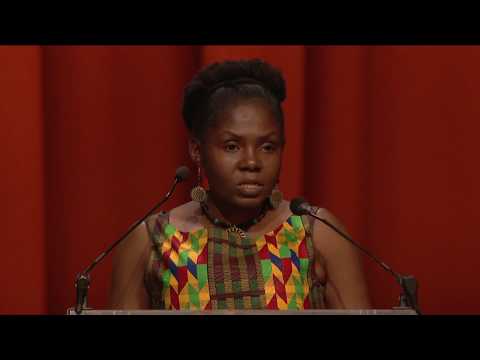
A formidable leader of the Afro-Colombian community,
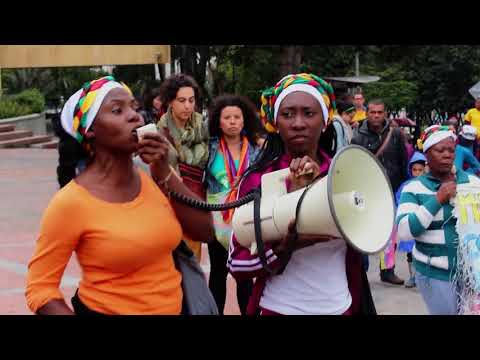
Francia Márquez organized the women of La Toma
and stopped illegal gold mining on their ancestral land.
She exerted steady pressure on the Colombian government
and spearheaded a 10-day, 350-mile march of 80 women
to the nation’s capital, resulting in the removal of all illegal
miners and equipment from her community.
The pillage of ancestral lands
Illegal gold mining is a growing problem in Colombia,
where 80% of gold is mined unlawfully, with devastating
impacts on the environment—including deforestation
and contamination of water sources. Illegal gold miners
are estimated to dump more than 30 tons of mercury
into rivers and lakes in the Amazon region each year,
poisoning fish and people as far as 250 miles downstream.
impacts on the environment—including deforestation
and contamination of water sources. Illegal gold miners
are estimated to dump more than 30 tons of mercury
into rivers and lakes in the Amazon region each year,
poisoning fish and people as far as 250 miles downstream.
La Toma sits in the Cauca Mountains of southwest Colombia,
at the epicenter of the country’s illegal gold mining epidemic.
The region is home to a quarter million Afro-Colombians,
a population that originally was brought as slaves from Africa
to work in Colombia’s colonial mines and haciendas.
The Afro-Colombian community has practiced agriculture
and artisanal mining for generations, using pickaxes and
panning for gold nuggets in the Ovejas River. The Ovejas i
s the lifeblood of the community, providing water to drink
and fish to eat year-round.
at the epicenter of the country’s illegal gold mining epidemic.
The region is home to a quarter million Afro-Colombians,
a population that originally was brought as slaves from Africa
to work in Colombia’s colonial mines and haciendas.
The Afro-Colombian community has practiced agriculture
and artisanal mining for generations, using pickaxes and
panning for gold nuggets in the Ovejas River. The Ovejas i
s the lifeblood of the community, providing water to drink
and fish to eat year-round.
In 2014, illegal miners began operating 14 backhoes on the
banks of the Ovejas River near La Toma, wreaking havoc
on the local environment. They cleared forests and dug
deep open pits, destroying the natural flow of the river and
killing fish. An estimated 2,000 such backhoes dotted the
Cauca region.
banks of the Ovejas River near La Toma, wreaking havoc
on the local environment. They cleared forests and dug
deep open pits, destroying the natural flow of the river and
killing fish. An estimated 2,000 such backhoes dotted the
Cauca region.
Hordes of illegal miners, numbering in the thousands,
descended upon the open pits in a rush for gold. Illegal
miners used mercury and cyanide to extract the gold
from dirt and rock. These toxic chemicals flowed directly
into the Ovejas River, contaminating the community’s
only source of fresh water. Mining camps transformed
into small cities, much like the boom towns of the California
Gold Rush. With populations of up to 5,000 people,
these cities gave rise to prostitution, illegal drug use,
and rampant violence as miners preyed upon and
clashed with local residents.
hhttps://www.youtube.com/watch?v=DF8NTVV-thc&feature=youtu
descended upon the open pits in a rush for gold. Illegal
miners used mercury and cyanide to extract the gold
from dirt and rock. These toxic chemicals flowed directly
into the Ovejas River, contaminating the community’s
only source of fresh water. Mining camps transformed
into small cities, much like the boom towns of the California
Gold Rush. With populations of up to 5,000 people,
these cities gave rise to prostitution, illegal drug use,
and rampant violence as miners preyed upon and
clashed with local residents.


No comments:
Post a Comment